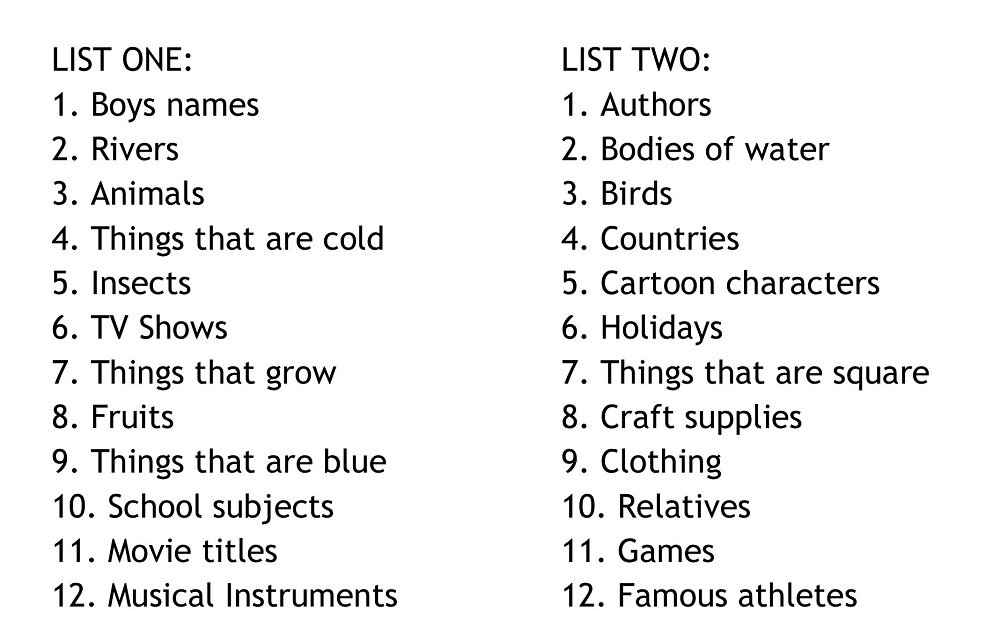
Playing Scattergories is a delightful way to ignite laughter and challenge minds, but let's be honest: sometimes the classic category lists can feel a bit... stale. If you're looking to transform your next game night from routine to roaring success, the secret lies in mastering Creative Scattergories Categories & Lists. It's about moving beyond "Things that are green" and diving into imaginative, personalized themes that resonate with your players, making every round a fresh adventure.
At a Glance: Elevate Your Scattergories Game
- Unlock Endless Fun: Discover how custom categories breathe new life into every game.
- Tailor to Any Group: Learn to design lists perfect for kids, adults, couples, or even your workplace.
- Explore Themed Worlds: Dive into categories inspired by pop culture, food, travel, and more.
- Boost the Challenge & Humor: Master categories that spark witty, unexpected, and hilarious answers.
- Refine Your Gameplay: Get expert tips on setting rules, managing tricky letters, and fostering lively debate.
Beyond the Box: Why Creative Categories Matter
Scattergories, first published by Milton Bradley in 1988, is elegantly simple: list items matching a category and a randomly chosen letter within a time limit. It’s a brilliant setup for quick thinking and playful competition. But its true genius lies in its flexibility. The standard game provides a set of category cards, often leading to repetitive rounds if you play frequently. This is where creative Scattergories categories and lists become your ultimate game-changer.
Think of it this way: a well-crafted list isn't just a random assortment of prompts; it's a carefully curated experience designed to spark specific kinds of thinking, inside jokes, or even a nostalgic trip down memory lane. It transforms a simple word game into a dynamic, personalized challenge that keeps everyone engaged and guessing.
Crafting Your Custom Scattergories Experience: The Art of Category Design
The beauty of Scattergories is that you don't need specialist equipment to play; a pen, paper, a list of categories, and a random letter generator (like a 20-sided die or an online tool) are all you need. This low barrier to entry makes it perfect for DIY customization. When creating your own lists, aim for 12 categories per round, as is traditional, but don't be afraid to mix and match or adjust based on your group.
Step 1: Tailor to Your Tribe
The first rule of category design is knowing your audience. What interests them? What inside jokes do you share? What’s their age range?
- For Kids: Focus on their world. Think "Things at a Playground," "Cartoons," "Candy," "Ice Cream Flavors," "Yucky Things To Eat Or Drink," "Pets," or "School Subjects." These are concrete and relatable.
- For Adults/Mature Audiences: You can push boundaries with "Bad Movie Tropes," "Things You Find At A Bar," "What You’d Tell Your Therapist," "Drugs," "Swear Words," or "Irrational Fears." These often lead to the most outrageous and memorable answers.
- For Couples: Inject some romantic (or comically unromantic) fun with "Your Partner’s Celebrity Look Alike," "A Word To Describe Their Driving," "A Chore They Hate To Do," "One Of Their Favorite Foods," or "Something They Can’t Live Without."
- For General Audiences: Keep it broad and accessible. "Breakfast Foods," "Vacation Destinations," "Cute Animals," "Things At A Party," "Articles of Clothing," "Fast Food," "Hobbies," or "Superheroes" are always solid choices.
Step 2: Brainstorm with abandon
Don't overthink it at first. Grab a timer, set it for 10 minutes, and just free-write every category idea that comes to mind. Don't censor yourself. Duplicates can be sorted later. The goal is quantity, then quality.
Step 3: Dive into Themed Lists That Tell a Story
This is where true creativity shines. Instead of disparate topics, build lists around a central theme. This adds a layer of cohesion and often prompts more imaginative answers.
1. Pop Culture Powerhouses
- Marvel Mania: "Marvel Characters," "Things a Superhero Would Say," "Villains," "Avengers Endgames," "Items in Tony Stark's Lab."
- Disney Delights: "Disney Movie Titles," "Pixar Movie Titles," "Disney Princesses," "Things Found in a Fairy Tale," "Characters from Toy Story."
- Music & Media: "Pop Stars," "Boy Bands," "Good Karaoke Songs," "Social Media Platforms," "TikTok Trends," "Book Series," "Reality TV Shows," "Internet Slang," "Emojis," "Computer Games," "Sitcom Characters," "Comic Books."
2. Foodie Fun
- Global Gastronomy: "National Cuisines," "Spices," "Desserts," "Baked Goods," "Vegetables," "Pasta Types," "Cheese Varieties."
- Drink Up: "Types of Soda," "Wine Varietals," "Soft Drink Brands," "Coffee Drinks," "Cocktail Ingredients."
- Sweet & Savory: "Chocolate Brands," "Ice Cream Flavors," "Unlikely Breakfast Foods," "Gross Things (to eat)."
3. Travel Bug Temptations
- Wanderlust Wonders: "Vacation Destinations," "Popular Tourist Destinations," "Airports," "UNESCO World Heritage Sites," "Famous Hotels or Resorts," "Cruise Lines," "Adventure Activities," "Travel Souvenirs," "Historical Landmarks," "Popular Beaches."
- Road Trip Ramblings: "Things You Pack for a Road Trip," "Car Brands," "States/Provinces," "National Parks."
4. Nature's Niche
- Wild Kingdom: "Cute Animals," "Flying Animals," "Mammals," "Ocean-dwelling Creatures," "Reptiles and Amphibians," "Nocturnal Animals," "Desert Animals," "Insects."
- Flora & Fauna: "Natural Wonders," "Flowers," "Trees," "Types of Ecosystems," "Things That Are Green."
5. Holiday Hilarity
- Seasonal Celebrations: "Annual Celebrations," "Holiday Songs," "Easter Basket Fillers," "Valentine’s Day Movies," "St. Patrick’s Day Foods," "Diwali Sweets," "Christmas Carols," "Thanksgiving Foods," "New Year’s Eve Party Themes."
- Spooky Szn: "Funny Halloween Costumes," "Things Found in a Haunted House," "Monsters."
6. Workplace Wonders
This category is fantastic for team-building or office parties, fostering camaraderie and shared laughs.
- Office Essentials: "Office stationery," "Workplace technology," "Job titles," "Coffee break," "Team building activities," "Office snacks," "Types of meetings," "Things You'd Find in Our Office," "Project Names," "Buzzwords."
- WFH Edition: "Things to do during a virtual meeting," "Home office distractions," "Things to wear for a video call (from the waist up)."
7. Arts & Crafts Corner
- Creative Pursuits: "Famous Artists," "Colors," "Tools used to create artworks," "Architectural styles," "Craft hobbies," "Pottery types," "Fabric varieties," "Art Museums," "Musical Instruments."
8. Sports Spectacle
- Athletic Adventures: "Team Sports," "Cities that have hosted the Olympics," "Athletes who have won a gold medal," "Football teams," "Sporting equipment," "Water-based sports," "Winter sports," "Extreme sports," "Types of Balls."
9. Fashion Forward
- Style & Glamour: "Fashion Designers," "Shoe Brands," "Popular Hairstyles," "Makeup Brands," "Skincare Items," "Seasonal Clothing Items," "Hat Styles," "Jewelries," "Fashion Capitals," "Perfume Brands," "Types of Fabric."
10. Movies & TV Marathons
- Cinema Classics: "Movie Genres," "Actor Names," "Famous Directors," "Movie Characters," "Animated Hits," "Film Equipment," "Filming Locations," "Bad Movie Tropes," "Romcom Movie Titles."
- Small Screen Superstars: "Reality TV Shows," "Sitcom Characters," "Canceled Celebrities," "Streaming Platforms."
Step 4: Level Up the Challenge and Inject Humor
Sometimes, the fun comes from categories that are slightly abstract, highly specific, or just plain silly.
- Abstract Concepts: "Reasons For Being Late," "Conspiracy Theories," "Things You Hate," "Irrational Fears," "Things You’d Tell Your Therapist." These force players to think outside the box.
- Specificity: Instead of "Animals," try "Nocturnal Animals." Instead of "Foods," try "Unlikely Breakfast Foods."
- Humor & Absurdity: "Memes," "Bad Smells," "Cheesy Terms of Endearment," "Gross Things," "Funny Halloween Costumes." These guarantee laughter.
- "Things That Are...": This is a versatile prompt. "Things that are sticky," "Things that are fuzzy," "Things that are flat," "Things that are loud."
Remember, if you ever find yourself running low on inspiration, an online Scattergories generator can quickly churn out fresh ideas, serving as an excellent starting point for customization.
Beyond the Categories: Maximizing Your Scattergories Game Night
Having stellar categories is half the battle; the other half is knowing how to play to maximize the fun.
The Mechanics of Play: A Quick Refresher (with a twist)
Whether you're playing traditional Scattergories or a DIY version, the core gameplay is straightforward:
- Distribute Lists & Materials: Each player gets the same list of 12 categories, paper, and a pencil.
- Roll for a Letter: Use a 20-sided die (which typically excludes Q, U, V, X, Y, Z for commonality) or a random letter picker. All answers for the round must start with this letter. For a real challenge, include those tricky letters!
- Fill Out Your Sheet: Set a timer—three minutes is standard, but one minute makes for a frantic, hilarious pace. Players write one unique word for each category starting with the chosen letter. Remember: answers cannot repeat within a round, and "A," "An," or "The" don't count as the starting letter. Alliterative answers (e.g., "Amy Adams" for "A" in "Last Names") usually score a point per qualifying word.
- Award Points: Go around the group. Players read their answers. The key here is deciding how you'll score:
- Traditional: One point for every acceptable answer. If two players have the same answer, both can score.
- Competitive (and often funnier): One point only for unique, correct answers. If two or more people have the same answer, no one gets a point for that entry. This forces more creative, obscure answers.
- Declare a Winner: After a few rounds (typically three), the player with the most points wins.
Expert Strategies for Unforgettable Rounds
- Establish Ground Rules Early: Before playing, clarify how you'll handle adjectives (e.g., "Green pepper" for "G" under "Vegetables" – does the adjective count or the noun?). Consensus prevents arguments and keeps the game flowing.
- Embrace the Debate: The most fun often comes from discussing questionable answers. Is "Xylophone" a type of "Musical Instrument" for the letter "X"? Let the group vote! These discussions are part of the game's charm.
- Handle Tricky Letters: If your group struggles, avoid letters like Q, X, and Z. Or, lean into the challenge! For "X," "Xylophone" or "Xerox" for "Things you use at work" might be the only answers, creating a shared struggle and laugh.
- Fairness in Online Play: If playing virtually, have players submit their answers via chat simultaneously once the timer is up. This prevents "conveniently remembering" an answer after hearing others.
- Vary the Time Limit: Sometimes a shorter timer (even 60 seconds) creates more frantic, silly responses, while a longer timer (3-5 minutes) allows for deeper, more obscure dives into categories.
Your Burning Questions About Scattergories Categories, Answered
What are good Scattergories categories for work?
The best Scattergories categories for a workplace are those that are inclusive and accessible to everyone, regardless of their specific role or interests.
- General & Broad: "Things you find in an office," "Coffee break essentials," "Team building activities," "Project names," "Office snacks," "Job titles," "Things you dread in a meeting."
- Company-Specific (Use with caution): If everyone is comfortable, you can create categories like "Acronyms we use," "Things our CEO says," or "Departments." Just ensure they foster lighthearted fun, not discomfort.
- Promote Inclusivity: Avoid overly niche categories that only a few people would understand. Stick to topics that accommodate diverse knowledge and interests.
Can you play Scattergories for free?
Absolutely! Scattergories is incredibly accessible and can be played entirely for free. You don't need to buy the official board game. All you need are:
- Paper and pencils for each player.
- A list of categories (which you can create yourself using the tips above, or find free online lists).
- A way to pick a random letter (a 20-sided die, a bag of letter tiles, or a free online random letter generator).
- A timer (your phone's stopwatch works perfectly).
How many people can play Scattergories?
Scattergories is remarkably flexible in terms of player count.
- Small Groups: It works very well with as few as two players, though the "unique answers" scoring rule might be less effective.
- Standard Groups: It's ideal for 3-6 players, which allows for good discussion and varied answers.
- Large Groups: You can easily scale it up for large groups or teams by splitting them into smaller sub-teams. Each team could then work collaboratively on one sheet, or compete against each other to come up with the best answers for their individual sheet. This makes it a fantastic game for parties, corporate events, or even virtual gatherings.
Your Next Game Night Awaits: Unleash Your Creativity
You now have the tools and inspiration to transcend basic Scattergories lists and curate game nights that are genuinely memorable. From pop culture deep dives to hilarious personal reflections, the categories you choose are the heart of the game. So gather your friends, family, or colleagues, get creative with your lists, and prepare for an evening filled with laughter, clever wordplay, and perhaps a few delightfully absurd answers. The best Scattergories game night is the one you design yourself.