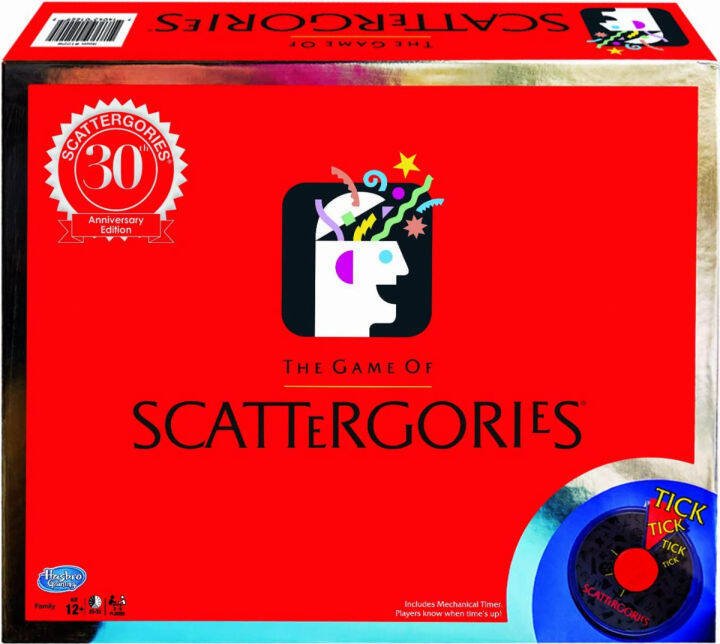
There’s a unique thrill to Scattergories. The die clatters, the timer starts, and suddenly your brain is a whirlwind of words, categories, and letters. You’re racing against the clock and your friends, trying to dredge up that perfect, obscure answer that no one else will think of. But what if you could do more than just hope for good answers? What if you had a clear strategy, a set of Scattergories Strategy & Winning Tips designed to give you a consistent edge?
You’re in the right place. This isn’t just a guide to playing Scattergories; it’s a deep dive into the psychology, wordplay, and tactical moves that separate the casual player from the undisputed champion. Let’s turn those chaotic three minutes into a calculated sprint to victory.
At a Glance: Your Winning Edge
- Go Obscure, But Not Too Obscure: Think niche categories, less common names, and international geography.
- Embrace the Obvious (Sometimes): Simple, overlooked answers can be unique.
- Specificity is Your Superpower: Add descriptive words to common answers to avoid duplicates.
- Master the Clock: Don't get stuck on one category; move on and circle back.
- Diversify Your Dictionary: Learn alternative spellings and less common proper nouns.
- Know Your Opponents: Tailor your strategy to their knowledge base and common tendencies.
- Practice Makes Perfect: The more you play, the better your mental agility becomes.
Beyond the Basics: Understanding the Game's Core Mechanics
Before we dive into advanced strategies, let's quickly reinforce the fundamental rules, as understanding them is the bedrock of any winning approach.
Scattergories is a classic party game built on speed, creativity, and a dash of lexical cunning. Here’s a quick refresher on how it typically works:
- The Setup: Each player receives an answer pad and a pen. A list number is chosen, revealing 12 categories for the round (e.g., "Things found in a kitchen," "A type of animal," "Brand names").
- The Roll: A 20-sided letter die is rolled, determining the starting letter for all answers in that round.
- The Timer: A three-minute timer begins. Players must fill in all 12 categories with unique answers that start with the rolled letter.
- The Scoring: Once time is up, players take turns reading their answers aloud for each category. You score 1 point for every answer that is unique among all players. If two or more players have the same answer, no one gets a point for that specific answer. Disputes over validity (e.g., "Does 'X' really fit 'A type of plant'?") are typically resolved by a group vote.
- The Rounds: Play multiple rounds (often three per list), tally total points, and the player with the highest score wins.
The critical takeaway? Uniqueness is paramount. A brilliant, complex answer that five people also wrote is worth zero points. A simple, perfectly valid answer that only you wrote is worth gold. This simple rule dictates much of our strategic thinking.
Mastering the Scattergories Mindset: General Approaches to Success
Winning isn't just about knowing words; it's about thinking strategically under pressure. Here's how to cultivate a champion's mindset.
Think "Uncommon but Valid"
This is your guiding star. When you see a category and a letter, your first thought shouldn't be the most obvious answer, but rather a valid answer that's less likely to be chosen by others.
- Example: If the letter is "C" and the category is "A type of animal," "Cat" is the absolute first thing most people will write. "Chimpanzee," "Camel," or "Chameleon" are better bets. Even "Cow" is often overlooked because it feels too simple.
Sometimes, the simplest answers are the most overlooked. Players often overthink and aim for complex words, assuming others will do the same. This can open up opportunities for you to snag points with straightforward, common words that your opponents bypass.
The Power of Specificity: Avoiding Duplicates with Flair
One of the most frustrating ways to lose points is through duplication. You had a great answer, but so did someone else. The solution? Get descriptive. Adding an adjective can transform a common answer into a unique one.
- Example:
- Category: "Things found in a kitchen"
- Letter: "F"
- Common Answer: "Fork" (Likely to be duplicated)
- Specific Answer: "Fancy Fork," "Flexible Fork," "Fondue Fork" (Much less likely to be duplicated)
This strategy works for almost any category. Think about colors, sizes, materials, or even famous associations. "Yellow Submarine" for "Song Title," "Green Grass" for "Something in Nature," or "Old Fashioned Ice Cream" for "Dessert." This mental trick is a game-changer.
Time Management: The Three-Minute Sprint
Three minutes is both ample and insufficient. The key is to allocate your time effectively.
- Quick Hits First: Scan through the list and immediately jot down any answers that come to mind easily. Don't linger.
- Tackle the Tough Ones: Once the easy answers are done, return to the categories that stumped you. Spend a maximum of 15-20 seconds on any single difficult category.
- Move On: If an answer isn't coming, move to the next category. Staring blankly at one spot wastes precious time you could use to brainstorm for another. You can always circle back if time allows.
- Last 30 Seconds: Use the final moments to re-check your answers, add specificity to any potentially duplicated ones, or make a final desperate attempt at an empty slot. An answer, even a dubious one, is better than a blank.
Your Lexical Arsenal: Expanding Your Wordpower
True Scattergories champions have a broader vocabulary and a mental database that goes beyond the everyday. Here’s how to build yours.
The Geographic Advantage
One of the most consistently effective strategies involves leveraging less common place names. While everyone might think of "France" or "Florida" for the letter "F," fewer will immediately jump to more obscure locations.
- African Geography: As the ground truth highlights, learning African country and city names can be incredibly beneficial. For example, for "A Country" starting with "B," "Botswana" is a strong contender against "Brazil." For "City," "Bamako" or "Bujumbura" for "B" are often unique.
- Other Continents: Don't stop at Africa. Explore less-known regions in Asia, South America, or even less populous states/cities in your own country. For "Island" starting with "S," "Samoa" is good, but "Svalbard" is even better.
The Name Game: Obscurity in Proper Nouns
Names—first, last, and fictional—are fertile ground for unique answers.
- Older Names: The ground truth suggests older names like Matilde, Clotilde, Lucile, Elisabeth, or Marguerite for "First Name (Female)" are excellent choices. They are valid, often start with less common letters, and are simply not top-of-mind for many players. Think "Ignatius" for "I" or "Prudence" for "P."
- Historical Figures: Brush up on historical figures, scientists, artists, and authors. "Galileo" for "G," "Voltaire" for "V." These are often unique.
- Fictional Characters: Dive into literature, mythology, or even lesser-known pop culture. "Gandalf" is common, but what about "Grendel" for "G"? Or "Quasimodo" for "Q"?
Spelling Variations: A Loophole for Points
Names and surnames can often have different spellings. This is a legitimate way to secure a unique point if someone else used the more common spelling.
- Example: If the letter is "J" and the category is "First Name (Male)," someone might write "Jeremy." You could write "Jeremiah." For "C," "Clovis" versus "Clovisse."
- Key: The name must be a recognizable variant. Don't invent spellings. A quick mental check: "Is this a real name or a commonly accepted alternative?"
Animals and Plants: Beyond the Obvious Zoo
Many people default to common animals or plants. Expand your mental bestiary and botanical garden.
- Animals: For "F," think "Ferret" or "Fossa" instead of "Fox." For "T," "Tapir" or "Tarsier" instead of "Tiger."
- Plants: For "A," consider "Anemone" or "Amaryllis" instead of "Apple tree." For "Z," "Zinnia" for "Flower" is a classic unique answer.
The Art of the Unique Answer: Strategies for Avoiding Duplicates
This is where the game is won or lost. Mastering the art of the unique answer is about predicting your opponents and outmaneuvering them.
"Red Apple" Principle: Descriptive Nouns
We touched on this, but it bears repeating as a core strategy. For almost any noun-based category, adding a specific adjective can make your answer unique.
- Category: "Color" / Letter: "S"
- Common: "Silver"
- Unique: "Sky Blue," "Salmon Pink," "Sepia Tone"
- Category: "Liquid" / Letter: "C"
- Common: "Coffee"
- Unique: "Chilled Coconut Water," "Carbonated Cider"
This strategy is especially powerful in the last minute when you're quickly trying to differentiate your answers.
The "Too Simple to Be Chosen" Gambit
Sometimes, the best strategy is to be utterly straightforward. Players often assume everyone will go for complex answers, thus overlooking the most basic options.
- Category: "Vehicle" / Letter: "C"
- Many might think "Chariot," "Convertible," "Canoe."
- Few might think "Car." If no one else writes "Car," you've just snagged a point with the easiest answer possible.
This is a calculated risk, but it often pays off, especially against players who are prone to overthinking.
Nouns as Adjectives (and vice versa)
Sometimes you can stretch categories by using a noun as an adjective, or a verb as a noun.
- Category: "Things You Wear" / Letter: "H"
- "Hat" is obvious.
- "Hoodie" is good.
- What about "Headband"? Or even stretching to "Hair Tie" if the group allows? (Always be ready to justify!).
The boundaries of categories are often subjective, making group voting a critical part of the game. Push those boundaries, but be ready with a confident defense.
Tactical Play: Beyond Words, Into the Mind
Scattergories isn't just a vocabulary test; it's a test of nerves and social dynamics.
Strategic Distraction (Use with Caution)
The ground truth mentions "Talking a lot during the game can confuse opponents and disrupt their concentration." While this is true, it's a strategy best used sparingly and with good sportsmanship. You don't want to genuinely annoy your friends!
- Light Banter: A well-timed, good-natured comment like "Oh, this letter is impossible!" or "Wait, does X count for Y?" can break an opponent's focus without being disruptive.
- Feigned Struggle: Pretending to struggle on a category you've actually aced can make others doubt their own answers or waste time second-guessing.
- Be Mindful: The goal is to gain an edge, not to ruin the fun. Read the room and your opponents. If they prefer quiet concentration, respect that.
Know Your Audience: Adapting to Skill Levels
The controversial tip of "playing against less educated opponents" can be reframed into a far more ethical and useful strategy: know your audience and adapt.
- Playing with Kids/Beginners: With less experienced players, simple and common answers are often unique. You don't need to pull out "Zinnia" for "Z" if "Zebra" will be unique. Focus on clear, valid answers.
- Playing with Word Nerds/Experts: When facing highly skilled players, you must delve into the obscure, use specificity, and leverage your expanded vocabulary. They will anticipate common answers, so your default should be the "uncommon but valid" approach. This is where your knowledge of African capitals and obscure historical figures truly shines.
Understanding who you're playing with allows you to calibrate your effort and strategy appropriately, ensuring you're always aiming for the sweet spot of "unique but not too unique."
The "Blank Check" Strategy: Never Leave a Space Empty
Even if you're unsure about an answer, write something down. A blank space is guaranteed zero points. A questionable answer, however, has a chance.
- Example: Category: "Brand Names" / Letter: "X". You can't think of anything. You write "Xerox." Even if it's borderline or someone else has it, you've given yourself a chance. If you wrote nothing, you'd have zero.
- Justification: Be prepared to make a case for your more abstract or stretched answers during scoring. A confident, logical (even if slightly tenuous) justification can sway a group vote.
Common Pitfalls & How to Avoid Them
Even seasoned players can fall into traps. Guard against these common errors.
- The "Obvious Trap": Don't default to the first answer that pops into your head. That's usually the same answer everyone else thinks of. Pause for a second and try to pivot.
- Getting Stuck: As mentioned in time management, dwelling on one category is a point killer. Move on!
- Forgetting Uniqueness: Always mentally check: "Could someone else have this?" If yes, add a modifier or find an alternative.
- Ignoring the Timer: Don't let the pressure make you forget the clock. Keep one eye on it to manage your pace.
- Not Justifying: When disputes arise, don't be shy. Clearly and calmly explain why your answer is valid. Often, the player with the best argument wins the point.
Elevate Your Game: Resources and Practice
Consistent practice is the surest way to sharpen your Scattergories skills. The more lists you play, the broader your mental database becomes, and the faster you'll connect letters, categories, and unique answers.
Consider using an Online Scattergories list generator to practice on your own or with friends. These tools can provide an endless supply of new categories and letters, helping you explore different strategic approaches without having to set up the physical game every time. It’s an excellent way to drill obscure geography, practice adding adjectives, and improve your overall response time. Regular exposure to varied lists will expand your vocabulary and make you quicker on the draw.
Your Next Steps to Scattergories Domination
You now have a robust toolkit of Scattergories Strategy & Winning Tips, from expanding your mental lexicon to mastering time management and strategic thinking. But knowledge is only powerful when applied.
- Start Practicing: Don't wait for your next game night. Take a category list, roll a letter (or use an online generator!), and give yourself three minutes. See how many unique answers you can generate.
- Observe Your Opponents: During your next game, pay attention to their common patterns. Do they always go for the most obvious answers? Do they struggle with specific categories? Use this intelligence to tailor your strategy.
- Expand Your Knowledge Base: Make a conscious effort to learn a few new facts—a handful of less common city names, some older names, or obscure animals. Even a little effort goes a long way.
- Embrace Creativity: Don't be afraid to think outside the box. The most unexpected answers are often the most unique and rewarding.
Scattergories is more than just a game; it's a delightful mental workout and a fantastic way to connect with friends. By applying these strategies, you're not just aiming for a higher score; you're enhancing your cognitive agility, expanding your vocabulary, and ensuring you're the one everyone looks at with a mixture of awe and playful envy when the final scores are tallied. Go forth and dominate!